Food & Culture
Moroccan Food Dishes to Try: 15 Local Favourites Explained
The top Moroccan food dishes to try are tagine (slow-cooked stew in a clay pot), couscous (traditionally served on Fridays), pastilla (a sweet-savoury pie), harira (tomato and lentil soup), tanjia (Marrakech's urn-cooked beef), msemen (flaky pancakes), zaalouk, mechoui, rfissa and sweet mint tea. Most cost little in local eateries.
- Signature dish: tagine — the name of both the clay pot and the stew cooked in it.
- Friday tradition: couscous is the family lunch after Friday prayers in many homes.
- Marrakech speciality: tanjia, slow-cooked for hours in the embers of a hammam furnace.
- Heritage: couscous knowledge and practices were added to UNESCO's intangible heritage list in 2020, shared by Maghreb countries.
- Drink: green tea with fresh mint and sugar, poured from a height.
Food is one of the best reasons to visit Morocco, and one of the easiest ways to connect with local life. As a Marrakech-based team, we eat these dishes every week — at home, at roadside cafés on the way to the Sahara and around the camp fire at night. Below are the Moroccan food dishes to try on your first trip, what is in them, and where they taste best. If you are heading to the desert, you will meet several of them on our 3-day Marrakech to Merzouga desert tour.
What are the best Moroccan food dishes to try?
1. Tagine
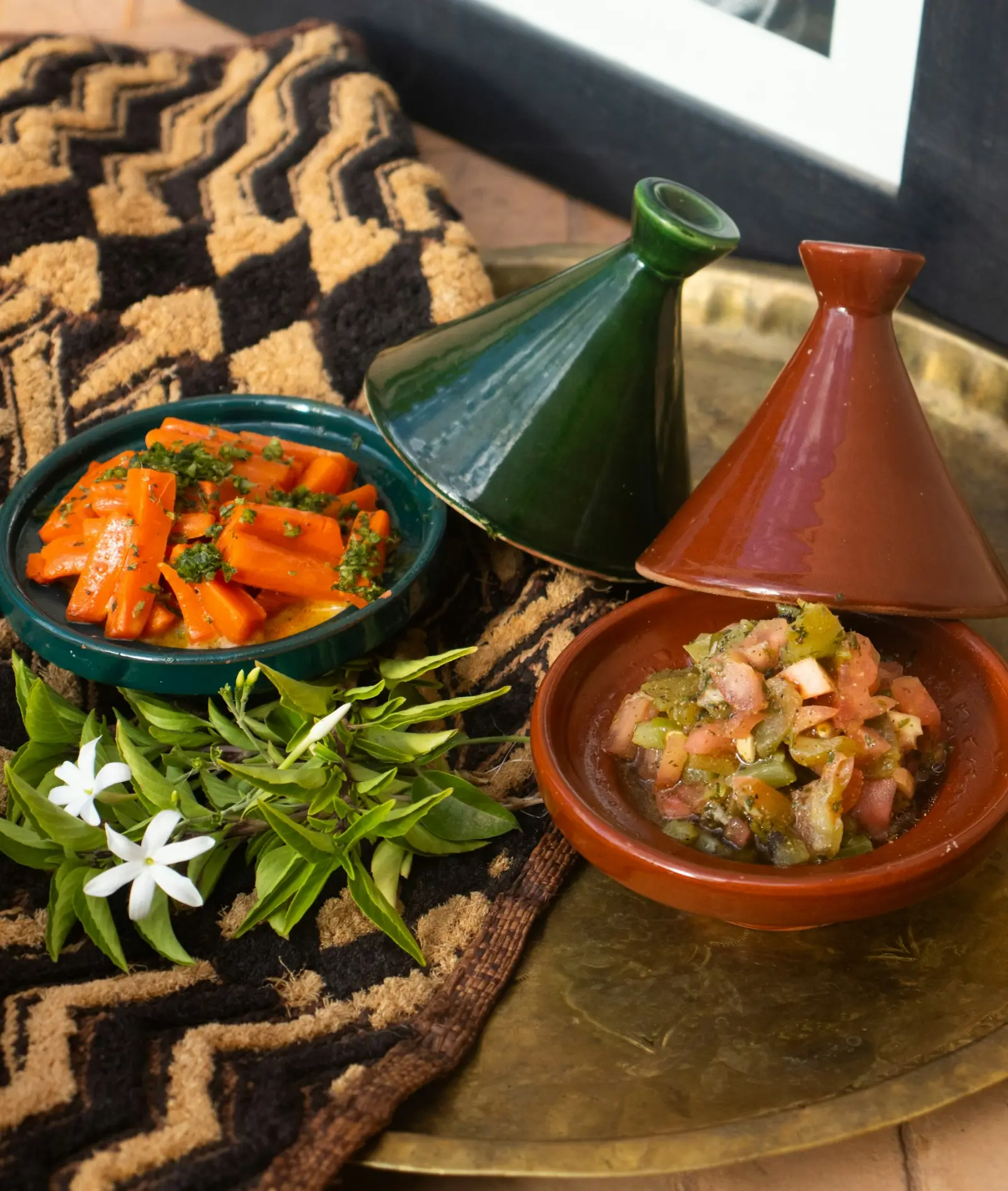
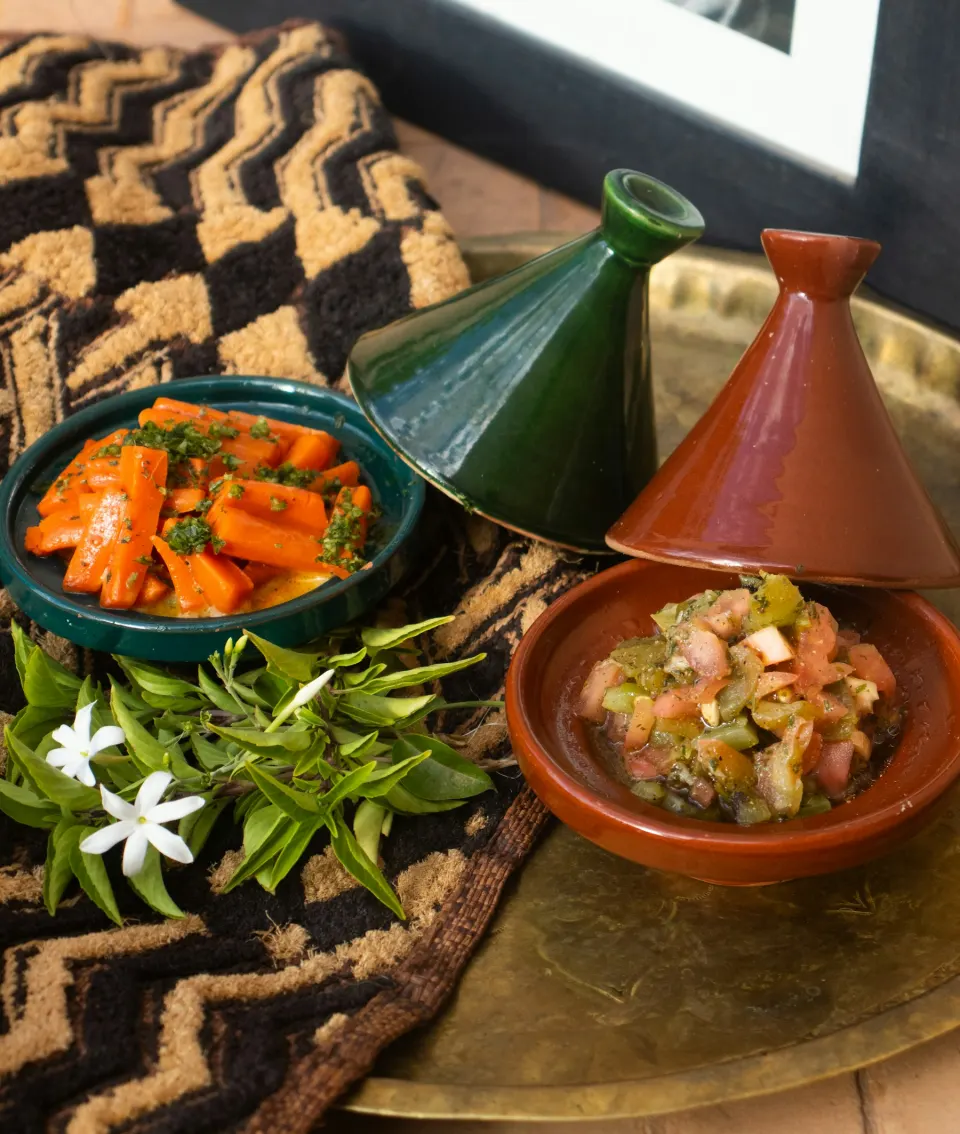
The dish everyone knows. A tagine is cooked slowly in a conical clay pot that traps steam, so meat becomes tender and sauces concentrate. Classic versions include chicken with preserved lemon and olives, lamb or beef with prunes and almonds, kefta (spiced meatballs) with eggs and tomato, and vegetable tagine. Each region and each family has its own spice balance — typically ginger, cumin, turmeric, paprika, saffron and ras el hanout.
2. Couscous
Fine semolina steamed several times over a stew of meat and seven vegetables, then piled high on a shared platter. In many Moroccan homes couscous is the Friday lunch. Look for couscous tfaya, topped with caramelised onions, raisins and cinnamon. Restaurants catering to visitors often serve it every day, but the Friday version in a local eatery is the most authentic.
3. Pastilla (bastilla)
A festive pie of paper-thin warqa pastry filled with spiced pigeon or chicken, eggs and almonds, then dusted with icing sugar and cinnamon. The sweet-savoury contrast surprises many visitors, and it is often served at weddings and celebrations. A seafood version, without the sugar, is popular in coastal cities.
4. Harira
A hearty soup of tomatoes, lentils, chickpeas, herbs and sometimes small pieces of meat, thickened with flour or egg. It is the traditional dish to break the fast during Ramadan, usually served with dates and chebakia (honey-soaked sesame cookies), but you can find it all year in cafés and food stalls.
5. Tanjia
Marrakech's own dish, and a favourite of our drivers. Beef or lamb is packed into a tall clay urn with preserved lemon, garlic, cumin, saffron and smen (aged butter), then taken to the farnatchi — the furnace that heats the neighbourhood hammam — where it cooks slowly in the embers for hours. The result is meat that falls apart. Look for it in the small grill stalls near the souks.
6. Msemen and other breakfast breads
Square, flaky pancakes of folded dough fried on a griddle, eaten with honey, butter or amlou (a spread of argan oil, almonds and honey). Breakfast in Morocco may also include baghrir (spongy "thousand-hole" pancakes), harcha (semolina flatbread) and fresh khobz bread with olive oil.
7. Zaalouk and taktouka
Cooked salads served warm or cold as starters. Zaalouk is smoky aubergine and tomato with garlic and cumin; taktouka is roasted green peppers and tomato. Both are eaten with bread rather than forks.
8. Mechoui
Whole lamb slow-roasted in an underground clay oven until the skin crisps and the meat pulls away, eaten with salt and cumin. In Marrakech, it is sold by weight at stalls close to Jemaa el-Fna, mostly at lunchtime.
9. Rfissa
Shredded msemen or trid pastry soaked in a broth of chicken, lentils, fenugreek and ras el hanout. It is comfort food, traditionally served to new mothers and on family occasions.
10. Bissara
A thick, warming soup of dried fava beans or split peas, finished with olive oil and cumin. Cheap, filling and a popular winter breakfast for workers.
11. Medfouna
Sometimes called "Berber pizza", this is flatbread stuffed with minced meat, onions, eggs and spices and baked. It is a speciality of Rissani and the Merzouga area, so look out for it on desert trips.
12. Grilled sardines and seafood
On the Atlantic coast, particularly in Essaouira, fish is grilled at the harbour stalls minutes after landing. Our Essaouira day trip from Marrakech leaves time for a harbour lunch.
13. Snail soup and street snacks
In Jemaa el-Fna, stalls serve bowls of snails in a broth spiced with herbs — locals swear it aids digestion. Other easy snacks include sfenj (Moroccan doughnuts), grilled brochettes and spiced boiled chickpeas.
14. Moroccan pastries
Try kaab el ghazal (gazelle horns, crescent pastries filled with almond paste), chebakia and briouats stuffed with almond and honey. They are best with tea in the afternoon.
15. Mint tea
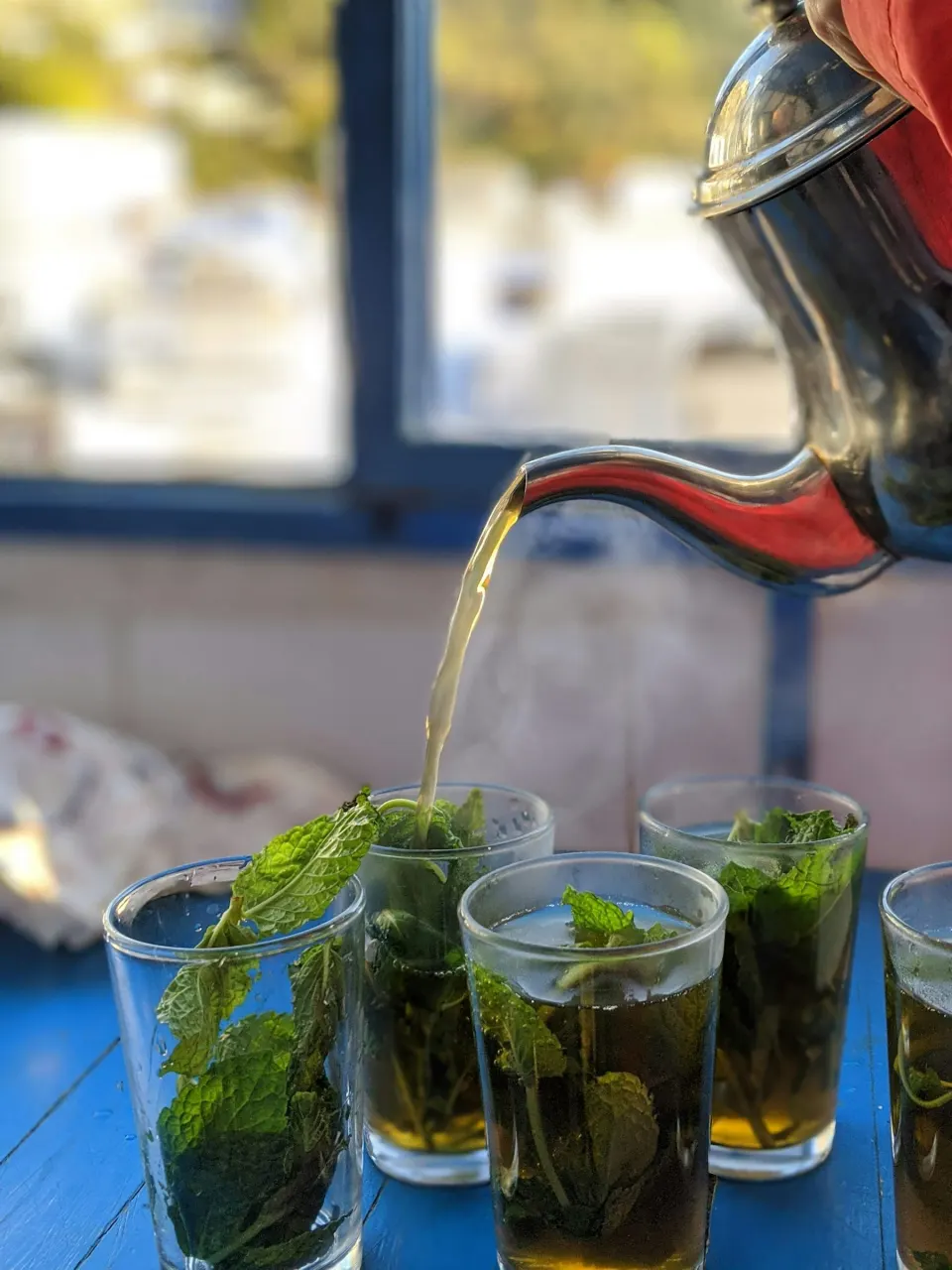
Not a dish, but impossible to leave out. Gunpowder green tea is brewed with fresh mint and generous sugar, then poured from a height to create foam. Accepting a glass is part of hospitality everywhere, from riads to Berber homes in the Atlas.
Quick guide: when and where to eat each dish
| Dish | Best time | Where to find it |
|---|---|---|
| Tagine | Lunch or dinner | Everywhere, from riads to roadside cafés |
| Couscous | Friday lunch | Family restaurants, homes |
| Pastilla | Celebrations, dinner | Traditional restaurants, Fes and Marrakech |
| Harira | Evening, Ramadan | Cafés and food stalls |
| Tanjia | Lunch | Marrakech medina grill stalls |
| Msemen | Breakfast | Street griddles, riad breakfasts |
| Medfouna | Lunch | Rissani and Merzouga |
| Mint tea | All day | Everywhere |
Regional Moroccan dishes to look out for
Moroccan cooking changes as you travel, so the list of Moroccan food dishes to try grows with every region you visit:
- Fes: known for refined city cooking, including pastilla and khlii, dried spiced beef preserved in fat and often fried with eggs at breakfast.
- Marrakech: tanjia, mechoui and the evening food stalls of Jemaa el-Fna.
- The High Atlas: simple Berber tagines, walnut and almond dishes, barley couscous and bread baked in clay ovens.
- The south and the Sahara: medfouna, dates from the Ziz and Draa valleys and slow-cooked tagines at desert camps.
- The coast: grilled fish, seafood pastilla and fish tagines in Essaouira and further south.
On a road trip from Marrakech to the desert, your driver will know the cafés where locals actually stop for lunch — usually the best tagine of the trip comes from a roadside grill rather than a smart restaurant.
Tips for eating well in Morocco
- Eat with your right hand when sharing from a communal plate, using bread as a scoop.
- Choose busy places where food is cooked to order and turnover is high.
- Vegetarians: ask for vegetable tagine or couscous, zaalouk, taktouka, bissara and lentil dishes.
- Water: stick to bottled or filtered water and be cautious with raw salads at first. Our article on whether Morocco is safe for tourists covers health basics.
- Ramadan: many cafés close during the day, but the evening ftour meal is a wonderful time to try harira and pastries.
Learn to cook Moroccan food in Marrakech
The best way to understand these dishes is to make them. Our Moroccan cooking class in Marrakech is a hands-on way to learn the techniques and spice blends behind dishes such as tagine. Message us on WhatsApp for the menu, timings and today's price. For more ideas in the city, see our list of things to do in Marrakech, and for background on Moroccan cuisine and regions, the Moroccan National Tourist Office is a good reference. You can also read about couscous on UNESCO's intangible heritage site.
Taste Morocco from the city to the Sahara
Book a cooking class in Marrakech or join our 3-day Merzouga desert tour with a dinner at our desert camp — message Walid on WhatsApp at +212 611-965381 for dates and today's price.
Frequently asked questions
What is the national dish of Morocco?
Is Moroccan food spicy?
What is the difference between tagine and tanjia?
Can vegetarians eat well in Morocco?
Founder of Pure Morocco Experience, born and based in Morocco. Walid and his team of drivers and guides run desert tours from Marrakech every week. More about us.