Travel Tips
What to Pack for Morocco Desert Tour: Complete Checklist
For a Morocco desert tour, pack light, loose layers that cover shoulders and knees, a warm jacket for the night, a scarf or cheche against sun and sand, sunglasses, high-factor sunscreen, a headlamp, a power bank and comfortable closed shoes. Bring a small overnight backpack, as main luggage usually stays in the vehicle.
- Bags: one main suitcase plus a small backpack for the night at camp
- Temperature swing: often 15°C or more between afternoon and night
- Power: Morocco uses 220 V with type C and E plugs; charging at camp may be limited
- Money: carry Moroccan dirhams in cash for lunches, tips and small purchases
- Must-haves: scarf, sunglasses, sunscreen, headlamp, warm layer
Working out what to pack for a Morocco desert tour is harder than it sounds. In three days you can go from a Marrakech riad to a 2,260 m mountain pass, down into warm gorges, and finally onto the dunes of Erg Chebbi, where afternoons are hot and nights can be surprisingly cold. Our guides have seen every packing mistake, from suitcases dragged across the sand to travellers shivering at the campfire in a T-shirt. Below is our answer to what to pack for Morocco desert tour trips. This checklist, written for journeys such as our 3-day Marrakech to Merzouga desert tour, covers everything you need and nothing you don't.
What to pack for Morocco desert tour: the essential checklist
Whatever the season, these items belong in your bag.
Clothing
- 2–3 loose, breathable tops, ideally long-sleeved in cotton or linen
- 1–2 pairs of lightweight trousers or a long skirt
- A warm fleece or sweater for the evening
- A light waterproof or windproof jacket
- Comfortable underwear and socks (a spare pair, as sand gets everywhere)
- Something comfortable to sleep in
Protection from sun and sand
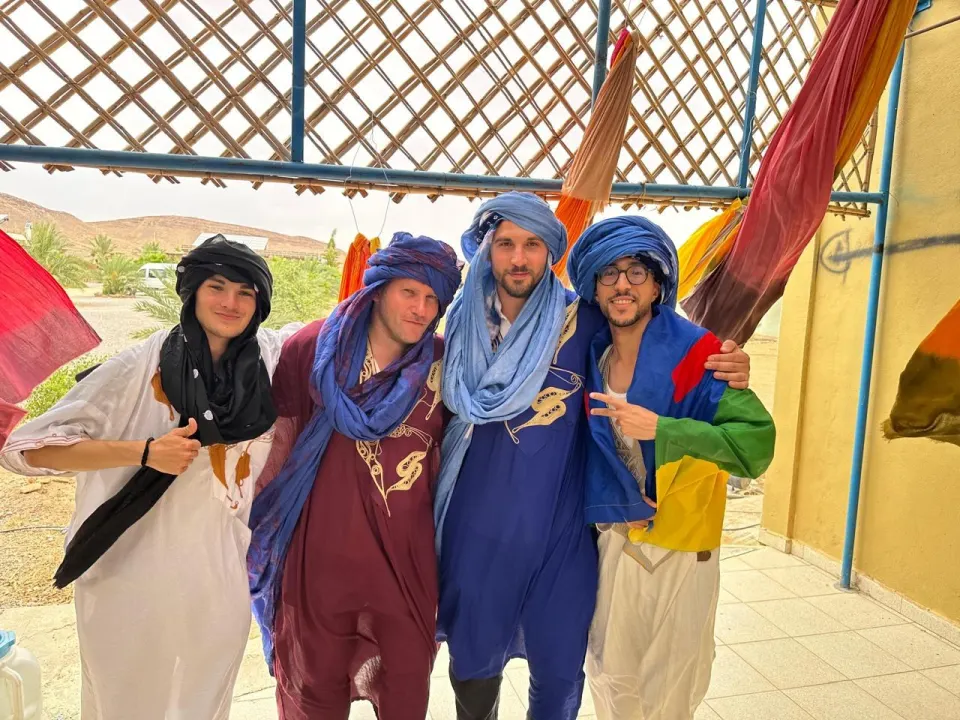
- A large scarf or cheche, the traditional desert turban that covers head, face and neck
- Sunglasses with UV protection
- High-factor sunscreen and SPF lip balm
- A wide-brimmed hat for stops in the gorges and villages
Footwear
- Closed trainers or light walking shoes for the gorges and climbing dunes
- Sandals or flip-flops for camp and the evening
Sand is easiest to walk on barefoot when it is not too hot, but it can burn your feet in the middle of a summer day, so keep shoes handy.
Gear and toiletries
- Headlamp or small torch for walking around camp at night
- Power bank and charging cables
- Refillable water bottle
- Wet wipes and hand sanitiser
- Basic medication: motion-sickness tablets for the mountain roads, rehydration salts, painkillers, plasters
- Zip-lock bags to protect your phone and camera from fine sand
- A small quick-dry towel
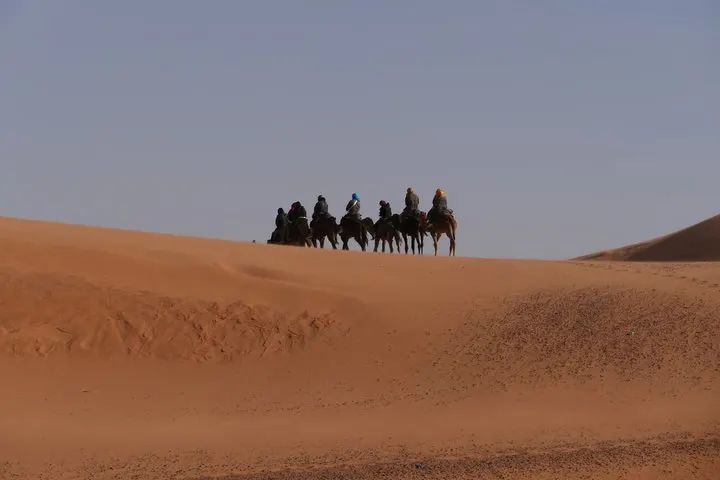
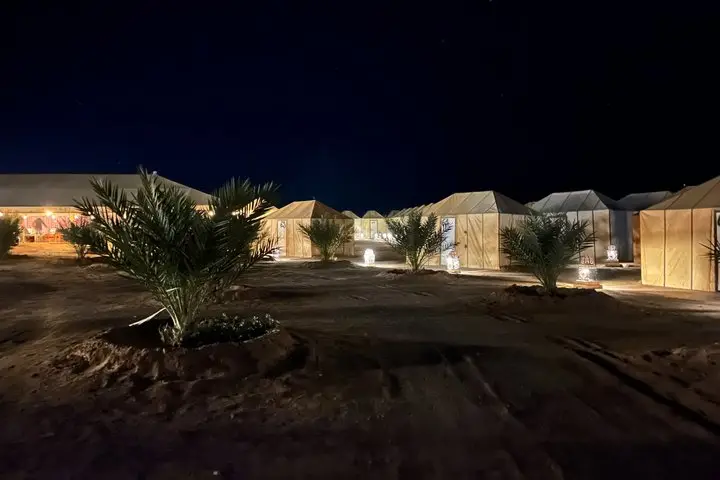
Pack a small overnight bag for the desert camp
This is the single most useful tip we give. On most tours, you ride a camel or walk from the edge of the dunes to camp, and large suitcases stay locked in the vehicle overnight. Pack a small backpack with only what you need for one night:
- Warm layer, hat and the clothes for the next morning
- Toothbrush, toothpaste, wet wipes and medication
- Headlamp, phone, power bank and camera
- Scarf, sunglasses and sunscreen for the sunrise
- A bottle of water
A backpack with two shoulder straps is much easier on a camel than a shoulder bag.
Desert packing list by season
The Sahara changes a lot through the year, so adapt your bag to the month you travel. If you have not chosen your dates yet, read our guide to the best time to visit the Sahara.
| Season | Typical conditions in Merzouga | Add to the essentials |
|---|---|---|
| Spring (Mar–May) | Warm days, cool nights, windy spells | Fleece, windproof jacket, extra scarf, eye drops |
| Summer (Jun–Aug) | Very hot days, often above 40°C; warm nights | Electrolytes, extra sunscreen, light long sleeves, insulated bottle |
| Autumn (Sep–Nov) | Hot to mild days, comfortable nights | Light sweater, sun hat; warmer layers from November |
| Winter (Dec–Feb) | Mild sunny days, nights close to freezing | Down or padded jacket, thermal base layer, beanie, gloves, warm socks |
Winter tip
Camps provide heavy blankets, but a thermal top and leggings to sleep in will make your night far more comfortable. The Tizi n'Tichka pass can also be cold or snowy, so keep your jacket accessible in the vehicle, not buried in your suitcase.
Summer tip
It is tempting to wear shorts and vest tops in the heat, but loose long sleeves keep you cooler in direct sun and protect against sunburn. Drink regularly, even when you do not feel thirsty.
What to wear in the Moroccan desert
Practical clothing for the desert is also respectful clothing for Morocco. Loose, light layers in neutral colours do three jobs at once: they protect you from the sun, they keep sand away from your skin, and they are appropriate in the conservative rural villages you pass through on the way.
Avoid tight jeans on the camel ride, as they become uncomfortable quickly; soft trousers or leggings under a long top work better. Pale colours stay cooler, while very dark fabrics absorb heat. If you forget a scarf, you can buy a cheche in Merzouga or along the route for a modest price, and your camel guide will happily show you how to tie it.
Packing tips for women on a Morocco desert tour
There is no legal dress code for visitors in Morocco, and in the desert camps you will see travellers in all kinds of clothing. That said, many women feel more comfortable, and attract less attention, when they dress modestly in towns and villages. A few practical suggestions from our team:
- Cover shoulders and knees in towns and villages. A light cardigan or shawl over a vest top is an easy solution.
- Maxi skirts and wide trousers are cool and comfortable, but choose trousers for the camel ride, as you sit astride the saddle.
- A large scarf is the most versatile item you can bring: sun protection, a cover-up, a pillow or an extra layer at night.
- Swimwear: some camps and hotels have pools; a cover-up for walking around is appreciated.
- Toiletries: bring any feminine hygiene products you need, as rural shops have a limited choice.
- Sports bra: worth packing if you plan to try sandboarding or the optional quad bike session.
For broader questions about travelling as a woman in Morocco, the UK government's travel advice for Morocco includes a useful section on local laws and customs, and we cover general safety in our article is Morocco safe for tourists.
Optional extras worth bringing
None of these are essential, but returning guests often tell us they were glad to have them:
- Earplugs and an eye mask: camps are peaceful, but tents can be close together and the dawn light arrives early.
- A light sleeping-bag liner: a nice extra layer of comfort and hygiene on cold nights.
- Binoculars or a star-map app: the sky over Erg Chebbi is exceptionally dark on moonless nights.
- Snacks: nuts or energy bars for the long driving stretches between stops.
- Small notes and coins: useful for tips, public toilets and roadside tea.
When people ask us what to pack for Morocco desert tour extras, our answer is always the same: if it is small, light and makes you comfortable, bring it; if it is heavy or valuable, leave it in Marrakech.
What not to pack
- Large hard-shell suitcases: they are fine for the vehicle but impossible on the sand. Use a soft bag if you can.
- Expensive jewellery: leave it in the hotel safe in Marrakech.
- Drones: Morocco restricts drone imports and use, and they may be held at customs. Check the rules before you travel.
- Too many outfits: sand and dust make everything look the same after a day. Two or three versatile outfits are enough for a 3-day trip.
Money, documents and electronics
Carry your passport on the tour, as hotels and camps often need details for registration. Withdraw dirhams in Marrakech or Ouarzazate, because ATMs are few and far between on the final stretch to Merzouga. Most camps have limited electricity from solar panels or generators, so arrive with a full phone and power bank. If you want to know more about the route and the stops where you can buy snacks and water, read our Marrakech to Merzouga guide. General tourist information is also available from the official Visit Morocco site.
Travelling on a longer itinerary? On our 4-day Sahara tour or a private Morocco tour, the same list applies; just add a few more changes of clothes and a laundry bag.
Bags packed? Let's head to the dunes
Join our local guides for a night under the Sahara stars on the 3-Day Marrakech to Merzouga Desert Tour, and message us on WhatsApp at +212 611-965381 with any packing questions before you travel.
Frequently asked questions
What should I wear on a camel ride in the Sahara?
Do I need warm clothes for a Morocco desert tour?
Can I bring my suitcase to the desert camp?
Do women need to cover up in the Moroccan desert?
Founder of Pure Morocco Experience, born and based in Morocco. Walid and his team of drivers and guides run desert tours from Marrakech every week. More about us.