Travel Tips
Is Morocco Safe for Tourists? An Honest Local Guide for 2026
Yes — for most visitors, Morocco is safe for tourists. Violent crime against travellers is uncommon, and millions visit every year without problems. The realistic risks are petty: pickpocketing in crowded medinas, persistent touts, fake guides and overcharging. Use licensed guides and metered taxis, dress modestly, and check your government's current travel advice before you go.
- Main risks: petty theft, scams, aggressive selling and road traffic — not violent crime.
- Emergency numbers: police 19, Royal Gendarmerie (outside cities) 177, ambulance and fire 15.
- Tourist police: present in Marrakech, Fes and other major cities, often near main squares.
- Solo women: verbal attention is common; physical harassment is much rarer.
- Official advice: UK FCDO and US State Department both publish updated Morocco pages.
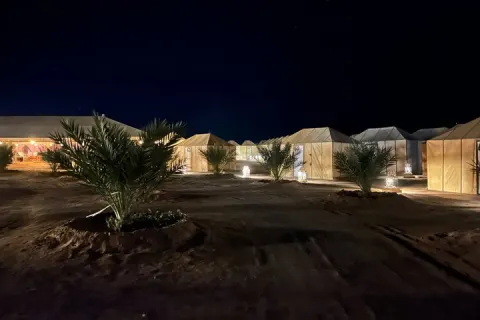
We are a small tour company based in Marrakech, and "is Morocco safe for tourists?" is one of the first questions we hear on WhatsApp. This guide gives you the honest answer we would give a friend: what actually goes wrong, what almost never does, and the simple habits that keep your trip relaxed. If you are already planning the Sahara, our 3-day Marrakech to Merzouga desert tour is designed so that transport, camp and guides are all taken care of by people we know personally.
Is Morocco safe for tourists in 2026?
Morocco is a stable country with a large, well-established tourism industry. Police and the Royal Gendarmerie are highly visible, including checkpoints on main roads, and tourist areas are generally well patrolled. That said, no country is risk-free. Like the UK, France or Spain, Morocco faces a general terrorism threat that foreign offices mention in their advice, and the government takes security seriously.
The fair summary is this: the chance of something serious happening to you is low, while the chance of being hassled, overcharged or mildly scammed is fairly high if you are not prepared. Most of this guide is about the second category, because that is what shapes your experience.
Check official travel advice before you book
Situations change, so always read your own government's page shortly before travel. Two of the most detailed are the UK government's Morocco travel advice and the US State Department travel site. They cover entry rules, local laws, health and any areas to avoid.
Common scams in Morocco and how to avoid them
None of these are dangerous, but they can cost money and spoil an afternoon. Knowing them in advance is most of the battle.
| Scam | How it works | What to do |
|---|---|---|
| "The road is closed" | A friendly stranger says your route or the square is closed and offers to walk you another way — usually to a shop or a tip demand. | Smile, say "la, shukran" (no, thank you) and keep walking. Use an offline map. |
| Fake guides | Unofficial guides attach themselves to you in the medina, then ask for payment. | Book licensed guides through your riad or a registered operator. |
| Tannery "free visit" | In Fes or Marrakech you are led to a tannery terrace, then pressured to tip or buy leather. | Agree a fee beforehand or go with your own guide. |
| Henna and photos | Henna is applied before you agree, or performers ask for money after a photo with snakes or monkeys. | Say no firmly before anyone touches your hand; avoid animal photo performers. |
| Taxi overcharging | Drivers refuse the meter or quote high fixed prices, especially at night or from stations. | Ask for "le compteur" (the meter) or agree the price before getting in. |
| Cheap desert tours | Very low-priced street offers that change the route, the camp or the vehicle once you are on the road. | Book with an operator you can verify through reviews. |
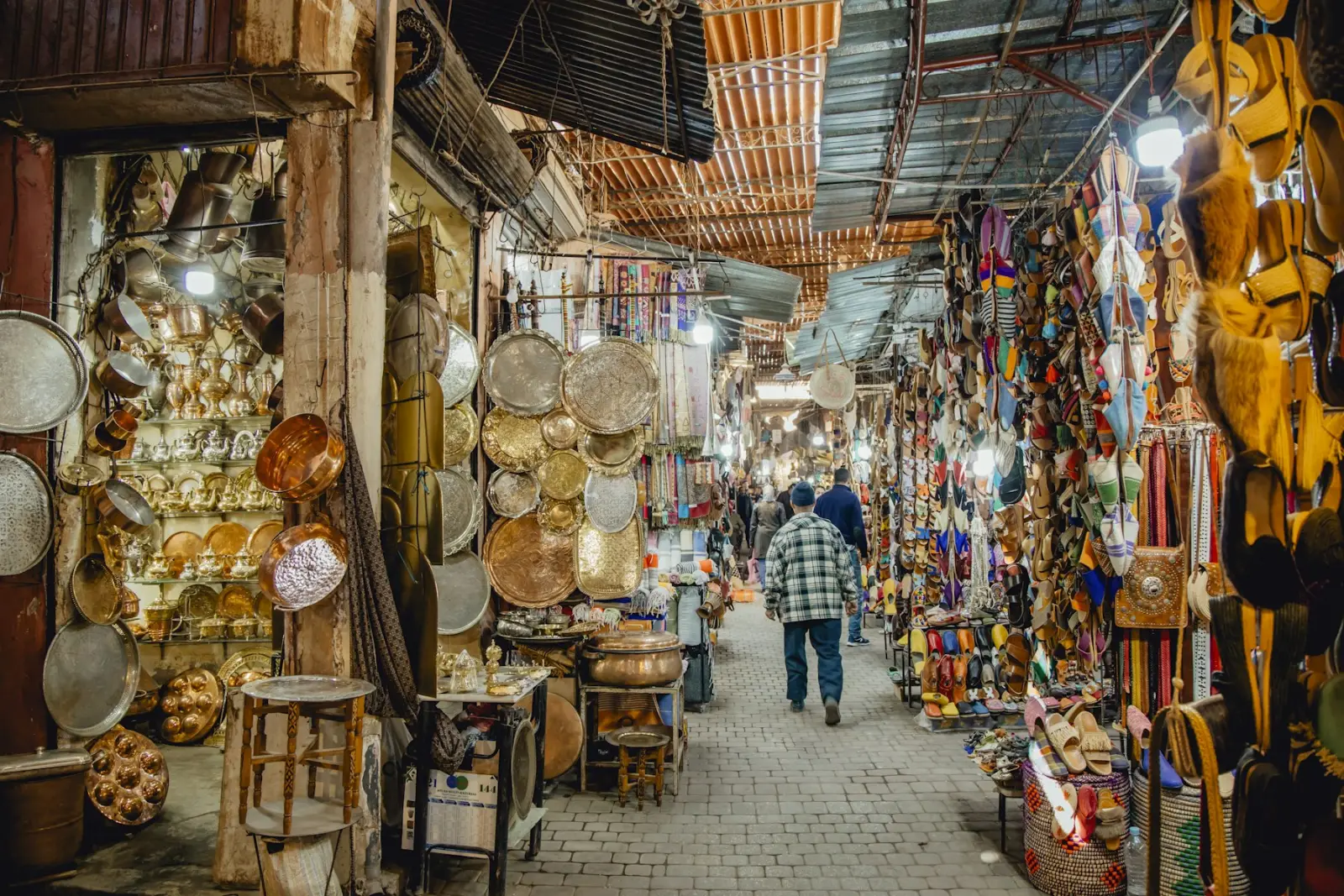
Bargaining in the souks is normal and not a scam. Decide what an item is worth to you, start lower, stay friendly and walk away if the price is not right. Our guide to things to do in Marrakech has more on the souks and the main square.
Is Morocco safe for solo female travellers?
Many women travel alone in Morocco and have a great trip, but it is honest to say the experience is different from travelling as a man or in a group. Comments, whistles and men trying to start conversations are common in cities, particularly in the medinas. Physical harassment is much less common, and Moroccans around you will often step in if someone oversteps.
- Dress modestly: shoulders and knees covered attracts noticeably less attention. A light scarf is useful for mosques and sun.
- Do not engage with persistent men: a short, firm "no" and continuing to walk works better than a long explanation.
- Choose your accommodation carefully: well-reviewed riads with staff on site at night are a good base.
- Use known transport: pre-booked transfers or registered drivers after dark rather than unmarked cars.
- Join small group or private tours: for long journeys like the Sahara, travelling with a vetted driver removes most hassle.
Women regularly join our desert tours alone, and our drivers and camp staff are used to looking after solo travellers.
Is the Sahara desert safe to visit?
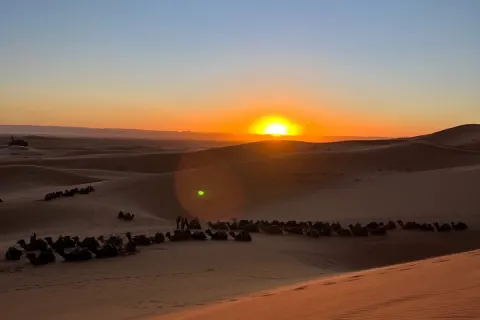
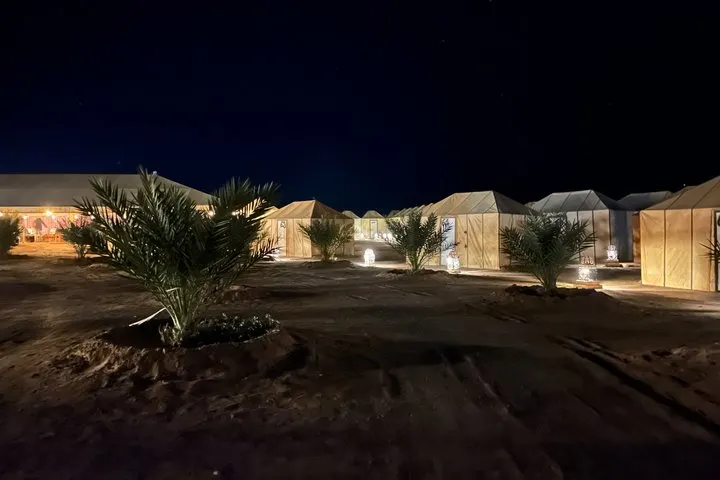
The Merzouga area and the Erg Chebbi dunes are a well-established tourist destination visited by travellers all year round. Stay on the tourist side of the dunes with your guide; the real risks in the desert are environmental rather than criminal:
- Heat and dehydration: in summer, temperatures in Merzouga regularly go well above 40°C. Drink often and avoid walking the dunes at midday.
- Cold nights: from November to February the desert can be close to freezing after dark — bring warm layers.
- Camel rides: lean back going downhill and hold on; cameleers walk beside the camels.
- Quad bikes and buggies: choose an operator with helmets and a guide, and do not ride off alone in the dunes.
- Getting lost: dunes look alike. Never wander far from camp at night without a light and telling staff.
Our article on the best time to visit the Sahara explains temperatures month by month, and the desert packing list covers clothing and sun protection.
Road safety and getting around
Statistically, traffic is a bigger risk than crime. Roads between major cities are generally good, and the motorway network links Casablanca, Rabat, Fes, Marrakech and Agadir. Mountain roads like the Tizi n'Tichka pass are paved but winding, with trucks and occasional rockfalls after heavy rain. If you are not used to driving in North Africa, a private driver is the safer option for long routes. In cities, take care crossing roads — scooters move fast and do not always follow lights.
Is Marrakech safe at night?
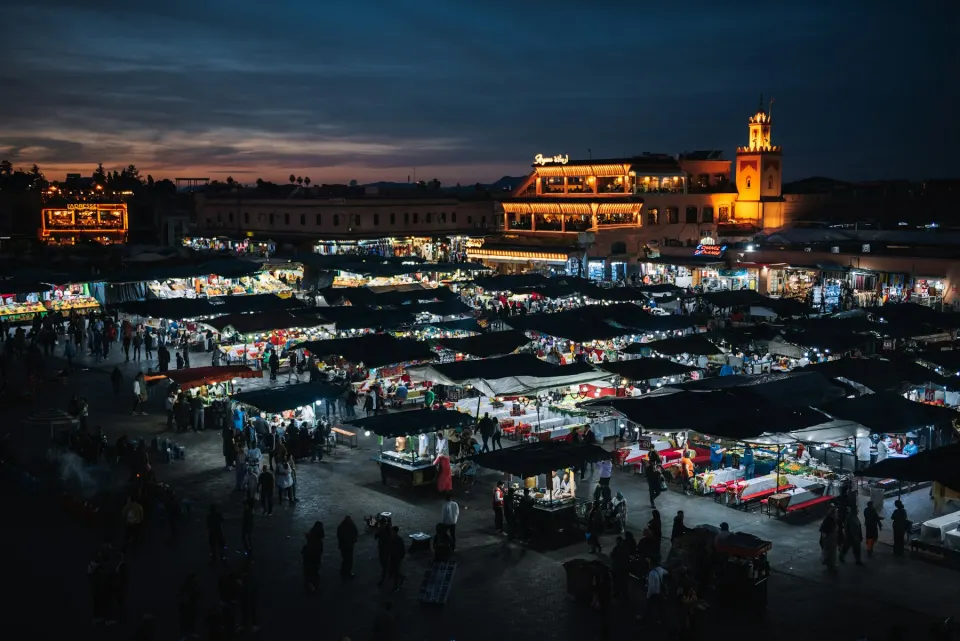
The main areas of Marrakech, including Jemaa el-Fna and Gueliz, are busy and lively in the evening and generally safe. Keep phones and wallets in front pockets or a cross-body bag in crowds, avoid empty unlit lanes late at night, and ask your riad to send someone to meet you if it is tucked deep in the medina.
Health, food and water
Most travel stomach upsets come from tap water and unwashed salad rather than "bad" food. Drink bottled or filtered water, choose busy food stalls where dishes are cooked to order, and carry hand sanitiser. Travel insurance that includes medical cover is essential; private clinics in Marrakech, Casablanca and Rabat are of a good standard but can be expensive. If you want to explore Moroccan cuisine with confidence, our guide to Moroccan food dishes to try is a good place to start.
Local laws and customs worth knowing
- Public displays of affection are best kept discreet, especially outside big cities.
- Drinking alcohol in public places is not acceptable; drink in licensed hotels, restaurants and bars.
- Ask before photographing people — many will say no, and some will ask for a tip.
- Drones require permission and are often confiscated at the airport if brought in without it.
- During Ramadan, avoid eating or drinking openly in the street during daylight hours.
Our verdict: is Morocco safe for tourists?
From our experience hosting travellers every week, the answer to "is Morocco safe for tourists" is yes, as long as you travel with ordinary city sense and realistic expectations about street selling. The most common complaint we hear is not about safety at all, but about being approached too often. A good guide, a trusted driver and a little knowledge of the scams above turn that into a minor detail of an otherwise warm and generous country.
Travel the Sahara with a local team you can trust
Our 3-day Marrakech to Merzouga desert tour is run by our own drivers and partner camp, rated 4.9/5 on Tripadvisor — message Walid on WhatsApp at +212 611-965381 with any safety question before you book, or contact us here.
Frequently asked questions
Is Marrakech safe for tourists?
What are the emergency numbers in Morocco?
Is it safe to do a desert tour in Morocco?
What should women wear in Morocco?
Founder of Pure Morocco Experience, born and based in Morocco. Walid and his team of drivers and guides run desert tours from Marrakech every week. More about us.